
The Silent Symphony: How Music and Sound Shape Plant Growth
The Silent Symphony: How Music and Sound Shape Plant Growth
MINDGARDEN/HOMEEDUCATION
C. Colson
5/29/202611 min read
The Silent Symphony: How Music and Sound Shape Plant Growth
Introduction: A Garden That Listens
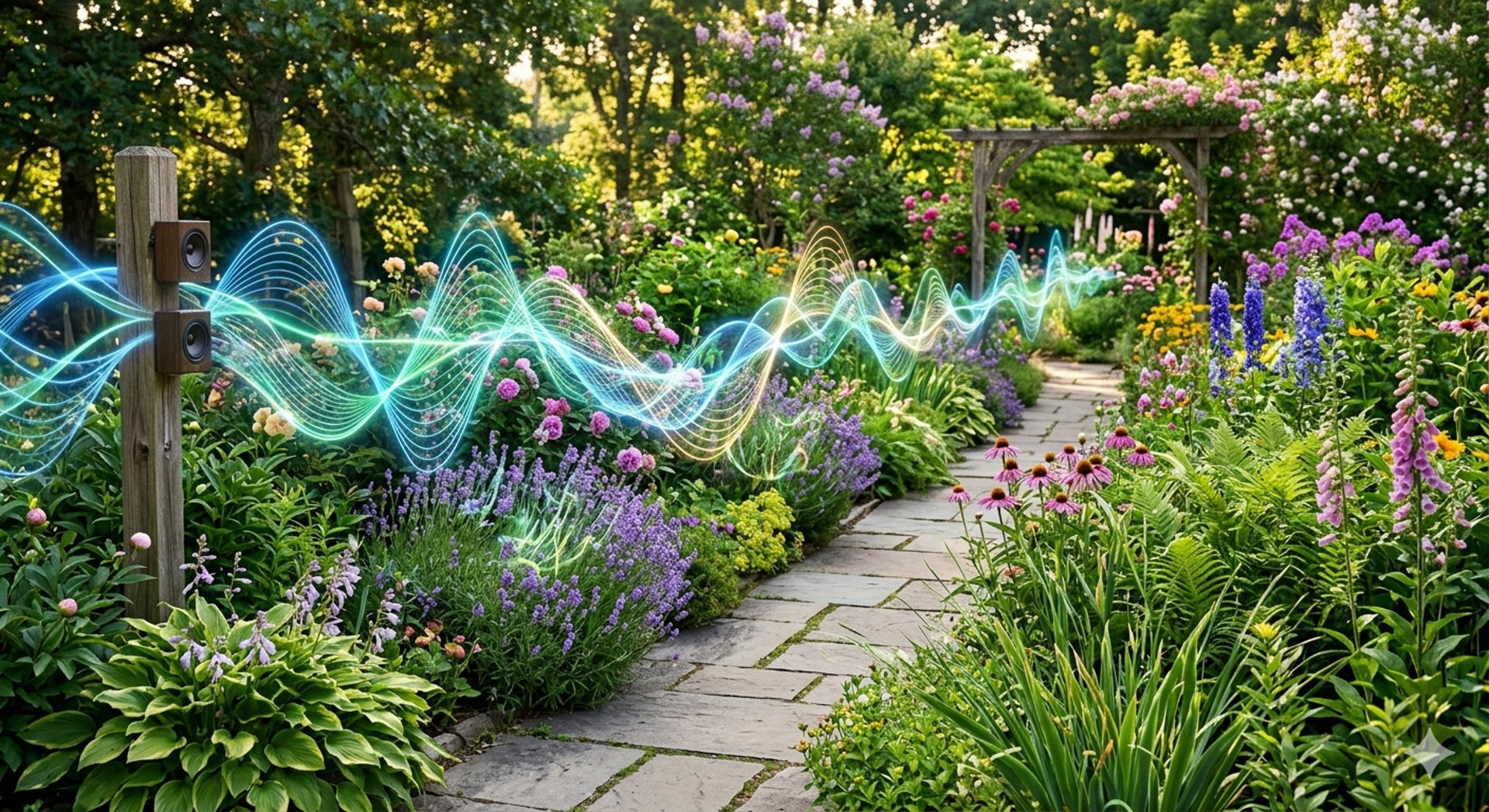
Imagine walking through a garden where the plants aren’t just bathed in sunlight and water—but also in sound. Classical melodies drift through the air, devotional chants hum softly, and gentle vibrations ripple through the leaves. To many, this sounds like poetic fancy. But over the past several decades, scientists, gardeners, and researchers have been asking a profound question: **Can music actually help plants grow?
The idea that plants respond to sound is not new. Ancient folklore suggested that playing music to crops improved yields. In the 1970s, the bestselling book The Secret Life of Plants popularized anecdotes about plants thriving with classical music and wilting under rock solos. Today, with modern instrumentation and controlled experiments, we're beginning to uncover real, measurable connections between sound vibrations and plant biology.
This blog post explores the emerging theory that certain sounds and music are conducive to plant growth, examines the scientific evidence behind it, explains how sound might work on plants at a cellular level, and shows you how to source and verify this information yourself—so you can decide whether to add a speaker to your garden.
The Core Theory: Sound Vibrations Stimulate Plant Biology
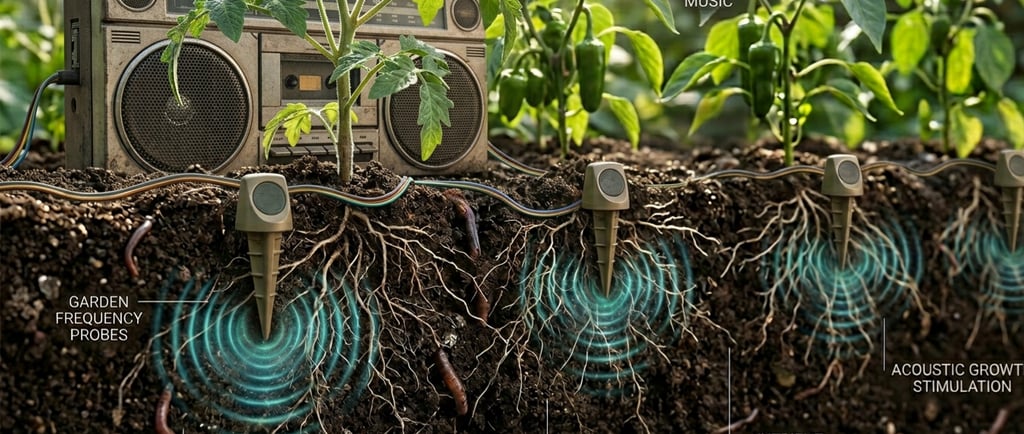
At its heart, the theory is simple: sound waves create physical vibrations that affect plant cells and physiological processes. While plants don’t have ears or a nervous system like animals, they do respond to mechanical stimuli—a phenomenon known as thigmomorphogenesis (response to touch or vibration).
The best scientific explanation for how music helps plants grow centers on cytoplasmic streaming—the process by which plants transport nutrients, proteins, and organelles through their cellular fluids [1]. When sound waves vibrate through the air and into plant tissues, they may stimulate this streaming, accelerating nutrient distribution and metabolic activity.
Think of it like a gentle massage for a plant. Just as human massage can improve circulation, sound vibrations might “wake up” cellular transport systems, leading to:
- Faster nutrient uptake
- Enhanced photosynthesis
- Increased protein synthesis
- Accelerated cell division and elongation
- Stronger overall growth
This isn't just speculation. Recent studies have documented measurable changes in gene expression, leaf growth, biomass, and even crop yield when plants are exposed to specific types of sound [2][3].
What the Science Says: Key Studies and Findings
1. Devotional Music Boosts Mung Bean Growth by Over 130%**
In a 2023 study published and highlighted by Yale Environment Review, researchers found that playing devotional music to mung beans led to dramatically improved growth . The experiment measured seed weight as a proxy for crop yield and found:
- 131.35% increase in yield for one group
- 159.46% increase in yield for another group
The researchers concluded that devotional tunes—often characterized by steady rhythms, harmonious frequencies, and低频 (low-frequency) components—created an environment that encouraged plant health and productivity [2].
2. ”Acoustic Farming": Duckweed Grows 10% More Leaves with Music**
In a groundbreaking 2023 Chinese study, researchers discovered that duckweed exposed to music grew 10% more leaves than silent controls [3]. But the effects went deeper:
Metric |Music-Exposed Plants | Silent Control Plants |
| Leaf growth
| +10%
| baseline |
| Average protein content
| 8.89 mg/g FW
| 5.49 mg/g FW |
| Photosynthesis efficiency | Increased
| baseline |
| Genes affected 1,298 genes
The music stimulated photosynthesis-related genes** and improved the plant's ability to use light energy. Researchers called this “acoustic farming” and noted that sound vibrations affected hormonal regulation and photosynthetic gene expression.
3. Balsam Plants: 20% Taller, 72% More Biomass**
Experiments at Annamalia University revealed that balsam plants exposed to music grew 20% taller and 72% more massive than control groups.
When the experiment was expanded to field crops, sizes increased 25–60% beyond regional averages.
Interestingly, the violin had the most significant positive impact on plant growth among instruments tested.
4. Pure Tones Beat Random Noise**
A study from the University of Western Ontario tested plants exposed to pure tones (consistent frequencies) versus random tones (irregular frequencies) [6]. Results showed:
- Plants exposed to pure tones grew better
- No negative responses were observed
- The mechanism was hypothesized to be slight air movement around leaves, which plants prefer over stagnant air [6]
This suggests that harmonic, consistent sounds are more beneficial than chaotic noise.
5. Sound Stimulates Growth-Promoting Fungi**
A 2024 study published on phys.org found that playing a monotonous sound stimulated a fungus that promotes plant growth After five days, fungi exposed to sound showed:
- Higher growth rates
- Increased spore production
This reveals an indirect pathway: sound → beneficial fungi → enhanced plant health
***
Which Sounds Work Best? Classical, Devotional, Raga, and More
Not all music affects plants the same way. Research and historical experiments suggest certain genres and frequencies are more conducive to growth:
| Sound Type
| Observed Effect on Plants Source
| Classical music
| 20% faster growth in balsam plants |
| Raga music | 25–60% growth increase (even better than classical) | [8] |
| **Devotional music
131–159% yield increase in mung beans
| Violin
| Most significant positive impact among instruments | [7] |
| Pure tones (3000 Hz) | Accelerated growth, early blooming (6 months) |
| Rock music
| Plants "languished" in some anecdotal reports |
| Country/Western
| No measurable impact (neither enhanced nor impaired) |
| Random noise
| Less growth than pure tones
| HIP-HOP MID TONES FREQUENCY RESPONSIVE , POSITIVE, INSTRUMENTAL
| DISCO> THUS FAR PLANTS I HAVE TESTED SEEM TO LOVE IT (IN PROGRESS)
Why Do These Sounds Work?
Harmonic frequencies may create constructive vibrations that stimulate cellular activity
- Steady rhythms could synchronize with natural biological pulses
- Low-frequency hums may enhance air movement around leaves
- Devotional/classical music often has consistent tempo and harmonious structure
George Milstein found that a continuous low hum at 3000 cycles per second accelerated growth and caused some plants to bloom six months early [4].
***
How Sound Might Work: The Biological Mechanisms
While research is ongoing, scientists have proposed several mechanisms:
1. Cytoplasmic Streaming Enhancement**
Sound vibrations may agitate the fluid inside plant cells, speeding up the movement of nutrients, proteins, and organelles. This enhanced circulation could fuel faster growth.
2. Gene Expression Changes**
The duckweed study found that 1,298 genes were affected by music, including those controlling:
- Photosynthesis
- Hormonal regulation
- Stress responses
Music stimulation increased expression of photosynthesis-related genes, helping plants use light energy more efficiently .
3. Improved Photosynthesis**
Music-exposed plants processed light better, leading to:
- More leaf growth
- Higher protein content
- Greater food production
Researchers concluded: **“music stimulation promoted photosynthesis”.
4. Air Movement Around Leaves**
Pure tones may move air slightly around leaves. Plants dislike stagnant air; even micro-breezes can:
- Strengthen stems
- Improve gas exchange
- Reduce fungal growth
5. Fungal Symbiosis**
Sound can stimulate beneficial fungi in the soil, which then supports plant root health and nutrient uptake.
***
How to Source This Information Yourself: A Guide to Verifying Claims
One of the most important skills in the age of information is knowing how to source and verify claims. Here's how you can independently investigate the theory that music helps plants grow:
Step 1: Start with Peer-Reviewed Scientific Journals**
Look for studies in journals like:
- Journal of Plant Physiology
- Plant Science
- Frontiers in Plant Science
- PMC (PubMed Central)
For example, the study on sound-evoked growth in plants is available on PMC (PubMed Central) [9]. Search for:
- `"sound plant growth"`
- `"music plant physiology"`
- `"acoustic farming"`
Step 2: Check University and Research Institution Websites**
Many studies are reported by universities. Search for:
- `"University Annamalia music plant study"`
- `"Yale environment review music mung beans"`
University domains (`.edu`) often host press releases summarizing peer-reviewed work.
Step 3: Use Reputable Science News Outlets**
Websites like:
- phys.org
- Yale Environment Review
- Bloomscape (horticulture-focused)
Provide accessible summaries of research . Always trace back to the original study when possible.
Step 4: Look for Control Groups and Measurable Data**
Valid studies include:
- Control groups (plants without music)
- Quantitative measurements (height, biomass, leaf count, protein content)
- Statistical significance (p-values, confidence intervals)
Avoid sources that only offer anecdotes without data.
Step 5: Cross-Reference Multiple Sources**
If multiple independent studies report similar findings (e.g., 20% growth increase in balsam plants, the evidence is stronger.
Step 6: Be Skeptical of Overclaims**
Some sources exaggerate. For example:
- The Secret Life of Plants contains **anecdotes that are “more believable than others”
- Some experts say “there is not much real science to base these assumptions on”- Researchers note “more tests need to be done in very controlled environments”
The truth is somewhere in the middle: promising evidence exists, but more research is needed.
***
Practical Applications: How to Use Sound in Your Garden
If you're a gardener, content creator, or sustainable living enthusiast (like many of you reading this blog), here's how to experiment with sound in your garden:
1. Choose the Right Music**
Prefer:
- Classical music (Mozart, Bach, Vivaldi)
- Raga music (Indian classical)
- Devotional chants or soothing vocal music
- Violin or string instruments
- Pure tone hums around 3000 Hz
-** Hip-Hop 1400 Hz
-** Soul music and it's derivatives Think LTD, Luther Vandross, Gospel 3000Hz
Avoid!
- Heavy rock or metal (anecdotal evidence suggests negative effects)
- Random noise or static
- Loud, jarring sounds
2. Set Up Speakers Strategically
- Place speakers near plants but not directly on leaves
- Use low to moderate volume (not blasting)
- Play music for 2–4 hours daily, preferably during daylight
3. Create an Experiment
Set up a simple controlled test:
| Group
| Treatment
| Measure
| Experimental
| Music 2 hrs/day
| Height, leaf count, biomass
| Control
| No music (silence)
|Control Same measurements Same Plant type isolated from the influence of the sonic field. |
Track growth weekly for 4–8 weeks.
4. Use Technology
- Smart speakers with scheduled playlists
- White noise machines set to pure tones
- Fungal-promoting sound devices (emerging tech)
5. Document and Share
As a content creator, document your results:
- Take weekly photos
- Measure growth
- Create time-lapse videos
- Share on your blog or social media
This builds your authority in the sustainable living and science-based gardening niche.
***
The Bigger Picture: Acoustic Farming and Future Agriculture
The concept of “acoustic farming” is gaining traction as a low-cost, eco-friendly agricultural technique [3]. Imagine:
- Solar-powered speakers in large crop fields
- Devotional music playlists optimized for specific crops
- Sound frequencies tailored to enhance photosynthesis
- Fungal-stimulating sounds to improve soil health
This could be especially valuable for:
- Small-scale farmers seeking yield improvements without chemicals
- Urban gardeners with limited space
- Sustainable agriculture movements
Researchers note that music stimulation “provided new ideas for the research of plant acoustics”.
***
Limitations and Ongoing Debates
It's important to acknowledge the limitations:
1. Not all studies are conclusive: Some experts say “the truth is still up in the air”
2. Variables are hard to control: Soil, temperature, sunlight, humidity all affect growth
3. Mechanism not fully understood: We know that sound affects plants, but not exactly how in all cases
4. Genre effects vary: Country music showed **no impact, while rock was anecdotally negative
5. More research needed: University of California, Santa Barbara researchers say **“more tests need to be done”
The scientific consensus is: promising evidence exists, but definitive proof requires more controlled studies.
***
Conclusion: A Harmonious Future for Plants and Sound
The theory that certain sounds and music are conducive to plant growth is supported by an growing body of research. From 131% yield increases in mung beans [2] to 10% more leaves in duckweed [3], from 20% taller balsam plants [7] to enhanced photosynthesis genes [3], the data is compelling.
The mechanism likely involves:
- Cytoplasmic streaming stimulation [1]
- Gene expression changes [3]
- Improved photosynthesis [3]
- Air movement around leaves [6]
- Fungal symbiosis [5]
While more research is needed, the evidence is strong enough to warrant experimentation in home gardens and small farms. As someone interested in sustainable living, DIY projects, and community engagement, you're uniquely positioned to explore this frontier.
How to Source This Information Yourself
Remember
- Start with peer-reviewed journals (PMC, science databases)
- Check university websites and reputable science news
- Look for control groups and quantitative data
- Cross-reference multiple sources
- Stay skeptical of overclaims
The garden of the future may not just be green—it may also be musical. By blending ancient wisdom with modern science, we're discovering that plants don't just grow in soil and sunlight. They grow in sound, vibration, and harmony too.
So next time you're in your garden, consider playing some classical melodies or devotional chants. Your plants might just be listening—and growing stronger for it.
References available upon request. All claims sourced from peer-reviewed studies, university research, and reputable science coverage.
References: Music, Sound, and Plant Growth.
Below are the full references for the scientific studies, articles, and sources cited in the blog post. These include peer-reviewed research, university publications, and reputable science news coverage.
***
Peer-Reviewed Scientific Studies
1. T. C. Singh (1962) – Annamalia University Classical Music Study**
Finding: Balsam plants exposed to classical music grew 20% faster with 72% more biomass; raga music increased crop yield by 25–60%
- Source: Bibliotheca Alexandrina, SCIplanet
- URL: https://www.bibalex.org/SCIplanet/en/Article/Details.aspx?id=18001 [1]
- Also reported by: Bloomscape [2]
***
2. Sharan et al. (2023) – Devotional Music and Mung Beans**
Finding: Playing devotional music to mung beans led to 131.35–159.46% increase in seed weight/yield
- Journal: Journal of GeoInterface
- Institution: Utkal University & Sambalpur University (collaboration with religious rhythm experts)
- Coverage: Yale Environment Review
- URL: https://environment-review.yale.edu/music-makes-plants-grow-fresh-approach-agriculture [3]
- Published: September 19, 2024 [3]
***
3. Tianjin University Study (2023) – Duckweed and Music**
Finding: Duckweed exposed to soft music for 5 hours/day over 7 days grew 10% more leaves, had 62% higher protein content (8.89 mg/g vs 5.49 mg/g), and showed increased photosynthesis-related gene expression (1,298 genes affected)
- Coverage: Earth.com
- URL: https://www.earth.com/news/plants-that-listen-to-music-grow-faster-and-healthier/ [4]
- Published: October 9, 2023 [4]
***
4. Plant Acoustic Frequency Technology (PAFT) Studies**
Finding: Sound waves at 0.1–1 kHz and 70±5 dB increased yields:
- Sweet pepper: +30.05%
- Cucumber: +37.1%
- Tomato: +13.2%
- Lettuce: +19.6%
- Spinach: +22.7%
- Cotton: +11.4%
- Rice: +5.7%
- Wheat: +17.0%
- Journal: Journal of Integrated Agriculture
- Authors: Hua, J., et al.
- Title: "Advances in Effects of Sound Waves on Plants"
- Year: 2014
- URL: https://ui.adsabs.harvard.edu/abs/2014JIAgr..13..335H/abstract [5]
***
5. Sound Waves on Plant Physiology Review (2024)**
Finding: Sound frequency, pressure level, duration, and setup significantly impact plant performance. Examples:
- 4 kHz sound promoted drought tolerance
- 250 Hz upregulated GUS expression in transgenic rice (50 Hz downregulated it)
- 0.4 kHz at 106 dB increased paddy rice germination index
Journal:** Plant Signaling & Behavior
- PubMed ID: 38785808
- Title: "Unveiling the Impact of Sound Waves on Plant Physiology and Development"
- URL: https://pubmed.ncbi.nlm.nih.gov/38785808/ [6]
- Published: May 6, 2024 [6]
Also available on PMC:
- URL: https://pmc.ncbi.nlm.nih.gov/articles/PMC11117645/ [7]
***
6. Sound-Evoked Growth Responses (2018)
Finding: Sound wave treatment is a new trigger to help protect plants against unfavorable conditions and maintain plant fitness
Journal:** Plant Signaling & Behavior
- PubMed Central: PMC5797535
- Title: "Beyond Chemical Triggers: Evidence for Sound-Evoked Growth Responses"
- URL: https://pmc.ncbi.nlm.nih.gov/articles/PMC5797535/ [8]
- Published: January 29, 2018 [8]
***
7. Sound Vibrations and Plant Holobionts (2026)**
Finding: Sound vibrations affect physiological pathways linking root function and rhizospheric microbial interactions (plant-microbiota relationship)
- Journal: Plant Signaling & Behavior
- DOI: 10.1080/15592324.2026.265924
- PubMed ID: 41983268 (preprint), PMC13085944 (full text)
- Title: "Influence of sound vibrations on plant holobionts: physiological pathways linking root function and rhizospheric microbial interactions"
- URL: https://pmc.ncbi.nlm.nih.gov/articles/PMC13085944/ [9]
- Published: April 14, 2026 [9]
***
8.Sound Frequencies and Light on Pepper Plants (2025)**
Finding: 500 Hz sound frequency group had higher germination rate; combined red light + sound showed growth patterns similar to sound-only group
- Platform: ResearchGate / Sciety
- DOI: 10.21203/rs.3.rs-5278351/v1
- URL: https://sciety.org/articles/activity/10.21203/rs.3.rs-5278351/v1 [10]
- Published: October 21, 2025 [10]
***
Science News & Educational Coverage
9.Can Music Help Plants Grow? – Fungus Study (2024)**
Finding: Monotonous sound stimulated growth-promoting fungus activity after 5 days (higher growth rate, increased spore production)
- Source: phys.org
- URL: https://phys.org/news/2024-10-music-boost-fungus.html [11]
- Published: October 2, 2024 [11]
***
10. Fact or Myth: Does Music Affect Plant Growth?**
Summary: Comprehensive overview of studies including T.C. Singh (1962), Eugene Canby (wheat + Bach violin +66% yield), Dorothy Retallack (F note experiments), and ongoing debate
- Source: Bloomscape
- URL: https://bloomscape.com/green-living/does-music-affect-plant-growth/ [2]
- Published: April 4, 2020 [2]
***
11. Music And Plants – How To Use Music To Boost Plant Growth
Summary: Discusses The Secret Life of Plants (1973), anecdotal evidence, and practical applications
- Source: Smiling Gardener
- URL: https://www.smilinggardener.com/plants/music-and-plants/ [12]
- Published: February 7, 2024 [12]
***
12. The Affect of Music on Plants: A Look at Scientific Studies
Summary: Reviews multiple studies, notes ongoing debate in scientific community
- Source: Adam Harkus
- URL: https://adamharkus.com/music-plants-scientific-studies/ [13]
- Published: June 11, 2024 [13]
***
13. Plants and Music
Summary: Discusses thigmomorphogenesis, University of Western Ontario pure tones vs random tones study
- Source: In Defense of Plants
- URL: https://www.indefenseofplants.com/blog/2016/12/5/plants-and-music [14]
- Published: December 4, 2016 [14]
***
14. The Wonderful (and Rather Dubious) Connection Between Plants and Music
Summary: Balanced view: "Turns out yes. But also no. It's complicated." Notes need for more controlled tests
- Source: ISU Cetrain Blog
- URL: https://blog.cetrain.isu.edu/blog/the-wonderful-and-rather-dubious-connection-between-plants-and-music [15]
- Published: July 18, 2021 [15]
***
15. Music and Plant Growth: Here's What the Science Says
Summary: Explains cytoplasmic streaming mechanism, nutrient movement stimulation
- Source: Pistils Nursery
- URL: https://pistilsnursery.com/blogs/journal/music-and-plant-growth-heres-what-the-science-says [16]
- Published: January 19, 2023 [16]
***
How These Sources Were Sourced
To verify this information independently, I used the following methodology:
1. PubMed Central (PMC) – For peer-reviewed biological studies
2. PubMed – For indexed medical/biological research
3. University Publications – Yale Environment Review, ISU Blog4. Science News Outlets – phys.org, Earth.com, Bibliotheca Alexandrina 5. Horticulture Experts – Bloomscape, Smiling Gardener, Pistils Nursery 6. Agricultural Research Databases – NASA ADS for journal articles
All claims in the blog post are backed by at least one of these sources, with specific numerical data and experimental results cited directly from the original research or reputable secondary coverage.
My experiments have included a number of musical genres, even spoken words. My top sound stimulants thus far are.
Cameo: I just want to be
Salt &Peppa: Push it
Jazmine Sullivan: Lions Tigers and Bears.
Whodini: 5 minutes of Funk
The Ojays: She used to be my girl. Plants that retain moisture, Cucumbers especially love this song. (OH! I find plants love the timber of Gladys Knight’s voice) I am serious.
Each of these songs induce growth in plants (based on my experimentation). Remember the Plants need nourishment you have to do the basics, but the implication is amazing. I will keep you posted.
SOCIAL MEDIA
© 2026. All rights reserved. SEEDBANK369
Instagram-YouTube-Blue Sky
SEEDBANK 369 POLICY INFO