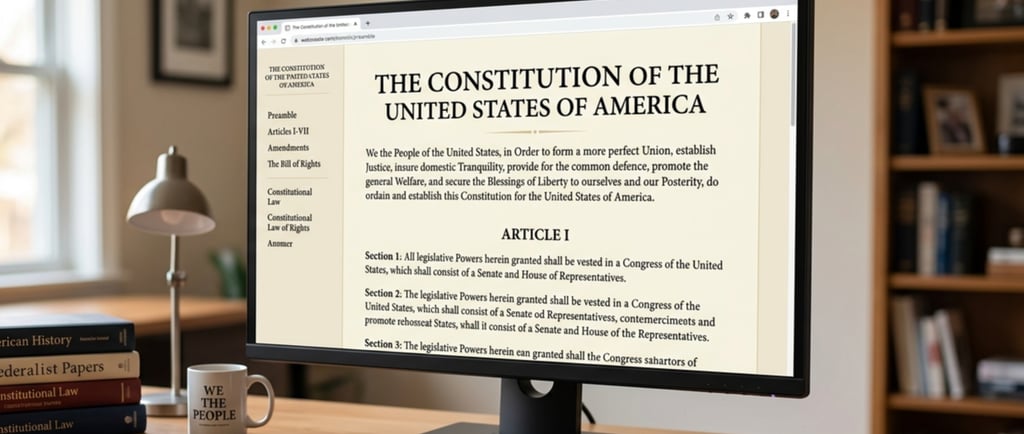
The Constitution, a living breathing document that needs to be fed, your attention.
The constitution, a living breathing document that needs to be fed, your attention. It's that important. . The constitution of the united states is a manual to your citizenship, and it is in your best interest to be as familiar with it as possible. Justice walks with knowledge.
AMERICATHE LAWPREPAREDNESS
C. Colson
6/6/20266 min read
The constitution, a living breathing document that needs to be fed, your attention.
For many Americans, the Constitution feels like a document for judges, politicians, and history teachers. It lives in textbooks, court opinions, and ceremonial speeches, but not always in everyday conversation. Yet for Black Americans and other minority communities, the Constitution is not just a historic artifact — it is a living framework that has shaped access to citizenship, voting rights, equal protection, and the basic promise of belonging in this country [1][2][3].
Now is a good time to familiarize yourself with it because the rights it contains are not abstract. They affect how power is used, how laws are enforced, and how communities are protected when their voices are ignored or challenged [4][5]. If you understand the Constitution, you are better equipped to understand both your protections and the limits of government power.
Why this matters now
Americans are living through a period of intense political division, rapid social change, and constant debate over what rights mean in practice. In moments like this, it is easy for people to feel overwhelmed, disengaged, or resigned. But the Constitution gives citizens a foundation for clarity when public discussion becomes confusing or misleading [4][5].
For African Americans in particular, the Constitution has been central to the long struggle from slavery to citizenship, from segregation to civil rights, and from formal recognition to ongoing demands for equal treatment under the law [1][2][3]. The 13th, 14th, and 15th Amendments were not symbolic gestures; they were foundational changes that ended slavery, established birthright citizenship and equal protection, and prohibited racial discrimination in voting [1][2][3]. Understanding those amendments is one way to understand how Black freedom was fought for, protected, challenged, and defended over generations [1][2][6].
A document tied to Black freedom
If you are Black in America, the Constitution cannot be separated from the history of Black struggle. It was used to justify exclusion and denial of rights in some eras, but it was also the basis for the legal victories that helped dismantle slavery’s legacy and challenge Jim Crow [1][2][6]. The 14th Amendment’s promise of due process and equal protection became one of the most important legal tools in the fight against discrimination [3].
That matters today because rights are not self-enforcing. They exist on paper, but they must be understood, asserted, and defended in real life. The history of Reconstruction, the civil rights movement, and voting rights enforcement shows that when citizens know the Constitution, they are better positioned to recognize when power is being misused and when institutions are failing to protect them [2][7][6].
Knowledge is protection
One of the biggest reasons to study the Constitution now is simple: knowledge protects you. Many people grow up hearing phrases like “freedom of speech,” “due process,” or “equal protection,” but never learn what those ideas actually mean in practice. That gap can leave people vulnerable to misinformation, intimidation, or civic apathy [4][3].
For minority communities, especially communities that have historically faced voter suppression and unequal treatment, this knowledge is even more important. The Constitution and the amendments tied to it are part of the legal foundation that protects voting rights, citizenship, and equal treatment under the law [1][8][7]. Knowing that foundation makes it harder for anyone to casually dismiss your rights or distort what the law actually says.
Voting and representation
Voting is one of the most direct ways the Constitution touches everyday life. The 15th Amendment prohibited denying the vote based on race, color, or previous condition of servitude, and later laws such as the Voting Rights Act were passed to enforce that promise [1][7][6]. That history is especially important for African Americans, because the right to vote was not simply granted and protected; it was fought for against poll taxes, literacy tests, intimidation, and other forms of suppression [1][2][6].
For many other minority communities, the lesson is the same: representation does not happen automatically. It requires awareness, participation, and vigilance. If you know the constitutional basis for voting rights and equal participation, you can better understand local and national debates about access, redistricting, election rules, and who gets heard in public life [8][7].
Equal protection in daily life
The Constitution matters far beyond elections. The 14th Amendment’s equal protection clause is one of the most powerful guarantees in American law, because it speaks to fairness in how laws are applied and how government treats people [3]. That principle is deeply relevant to Black Americans and other minorities who have historically been forced to prove, over and over again, that they deserve the same treatment others receive automatically [2][5].
This is why constitutional literacy is not just for lawyers. It affects how you think about policing, schools, housing, employment, public services, and access to justice. It gives you a way to ask better questions when something feels wrong and to recognize when an issue is not merely personal, but structural [4][3].
A shield against confusion
In today’s information environment, people are surrounded by opinions, slogans, and half-truths. Constitutional language is often used in debates without much care for accuracy. That can make it hard to separate genuine legal principles from political spin. Learning the Constitution helps you slow down, check claims, and understand what rights actually exist [4][5].
This is especially useful for communities that have often been targeted by confusion, exclusion, and fear-based messaging. When people know the document itself, they are less likely to be manipulated by shallow arguments or empty promises. They can look at policy through a clearer lens and recognize when leaders are respecting rights or undermining them.
Why minority communities should care
The Constitution is often described as a framework for the whole nation, but some communities have had to depend on it more than others. African Americans, immigrants, Native peoples, Latinos, Asian Americans, and other minority groups have all had to fight for recognition, fairness, and access within systems that did not always protect them equally [4][5].
That is why familiarizing yourself with the Constitution is not about patriotism as performance. It is about self-respect, community protection, and civic power. When you understand the rules, the history, and the guarantees, you are less likely to be pushed aside and more likely to participate with confidence.
The limits and the promise
It is also important to be honest: the Constitution has never been perfect in practice. At different times, it was interpreted in ways that allowed segregation, inequality, and discrimination to persist [2][6]. Even now, people disagree about what various provisions mean and how far protections should reach [4][5].
Still, the document remains important precisely because it gives citizens something to demand better from. It contains promises that were not always fulfilled, but those promises became the basis for legal change and moral progress [1][3][7]. For Black Americans and minority communities, that history is a reminder that constitutional rights are not just inherited; they are claimed, defended, and expanded through struggle.
A civic habit worth building
Familiarizing yourself with the Constitution does not require becoming a scholar. It can begin with reading the Bill of Rights, the Reconstruction Amendments, and a few landmark cases or historical summaries. From there, you can build a habit of asking constitutional questions whenever public issues come up: What right is involved? Who is being protected? Who has the power here? What does the law actually say? [4][3]
That habit is valuable for every American, but especially for those whose communities have had to fight hardest for equal treatment. It turns the Constitution from a distant symbol into a practical tool. And in a time when rights, identity, and democracy are all being debated so loudly, that tool is worth knowing well.
Final Thoughts
Now is a good time to familiarize yourself with the Constitution because it helps you understand where your rights come from, how they are protected, and what history had to be overcome to secure them [1][2][3]. For African Americans and other minority communities, that knowledge carries even greater weight, because the Constitution has been both a battleground and a source of hard-won progress [2][7][6].
Knowing it will not solve every problem, but it will make you harder to mislead, harder to silence, and better prepared to stand on firm ground. In uncertain times, that is not a small thing.
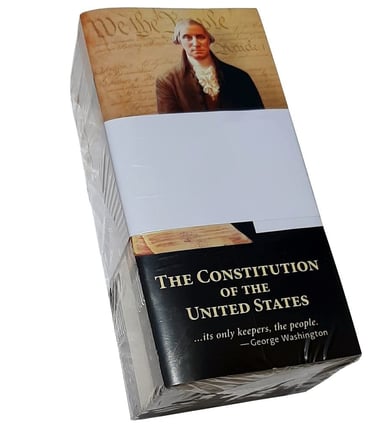
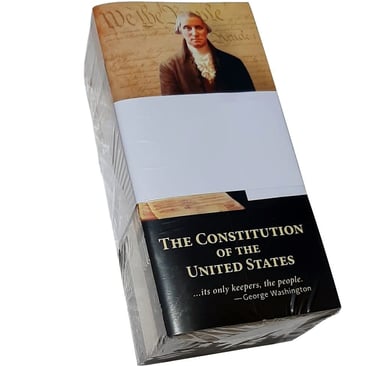
Please visit our AMAZON affiliate link below for your pocket edition of The United States Constitution
SOCIAL MEDIA
© 2026. All rights reserved. SEEDBANK369
Instagram-YouTube-Blue Sky
SEEDBANK 369 POLICY INFO