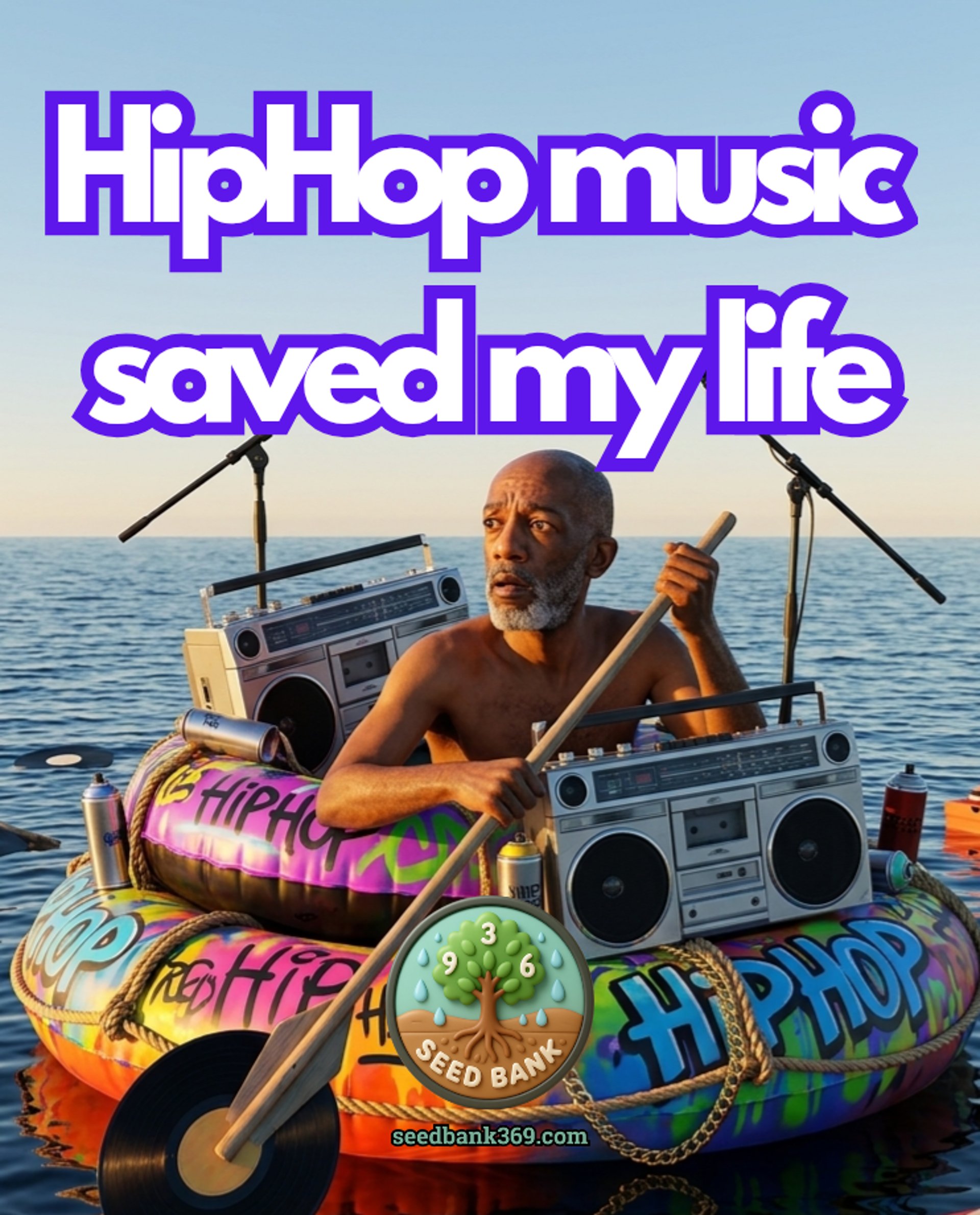
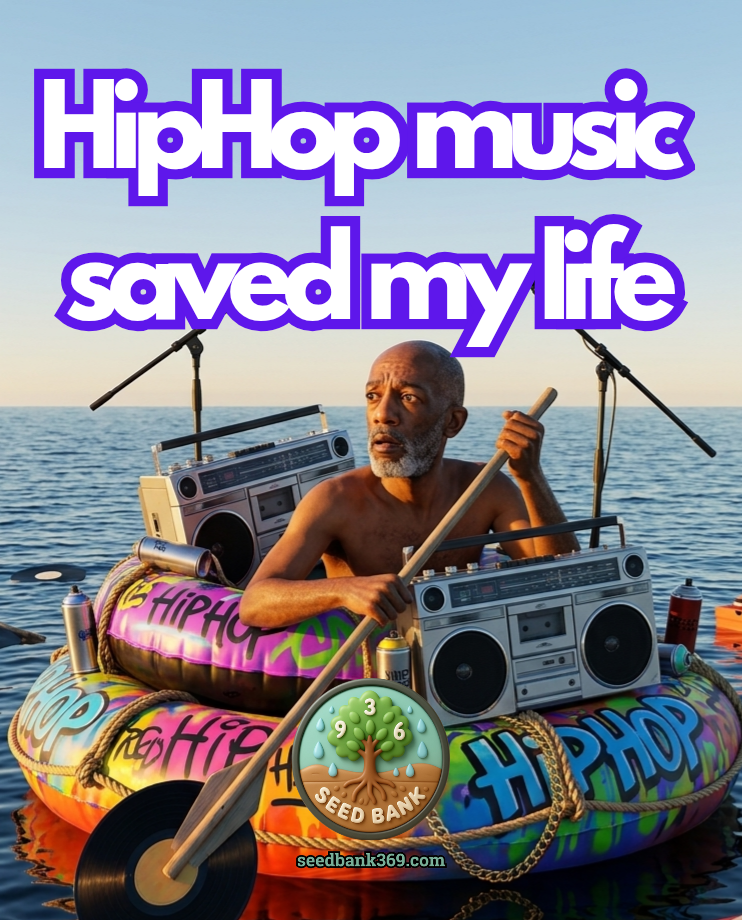
Hip-Hop music saved my life
Let me explain to you how Hip-Hop music, Poetry helped me regain cognitive ability after a stroke
HIP HOP CULTUREMINDHEALTH
C. Colson
6/13/20267 min read
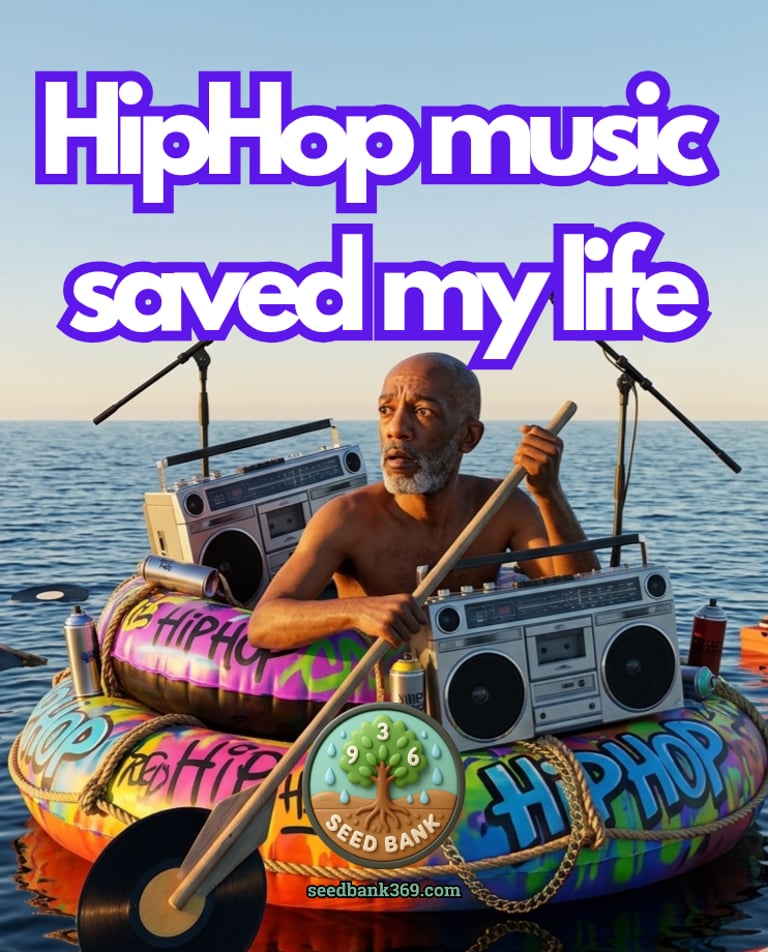
HIP‑HOP music Saved My Life
I remember the day of my stroke like a bad line in a song I couldn’t quite finish. It was five years ago, at work — a place I never expected to become the setting for the scariest, most decisive moment of my life. I was blessed to be in a medical facility when it happened. People who know the rhythm of emergency care moved fast: nurses, techs, providers, doctors. Their presence and professionalism changed the entire story. If it hadn’t been for them, the impact of that stroke would have been far worse.
What the doctors didn’t realize at first was how much of my recovery would come from an old habit, an old love: hip‑hop. Not the fame-chasing version you see on TV, but the real, grassroots stuff I lived through as a young man — the memorizing, the performing, the making of words into weapons and medicines. I reached back into that part of myself and used it as a scaffold to rebuild my neural and cognitive network. In many ways, hip‑hop saved my life twice — once when I was young and hungry to make music, and again when I was middle-aged, fighting to reclaim my brain.
The immediate aftermath
After the initial shock, the early days were a blur of scans, tests, and an avalanche of medical terms that sounded like foreign lyrics. I couldn’t always find the words I wanted. Sometimes a sentence would hang in the air, unfinished, like a rhyme that wouldn’t come. That was terrifying. Language was once my playground — I could memorize long verses, spit flawless cadences, and perform without missing a beat. Now my brain felt like a studio with the wrong cables plugged in.
The medical team gave me the physical tools: therapies, medications, and a roadmap for recovery. Their work was essential — they stopped the bleeding, managed the damage, and set me on a protocol that might get me back to some version of myself. But recovery is more than medical charts and appointments. It’s about habits, identity, and motivation. It’s about finding the internal drive to keep showing up every day when progress is measured in millimeters.
Rediscovering rhythm and rhyme
Music had been in my blood since I was young. Hip‑hop taught me structure — punchlines, internal rhyme, cadence, breath control. Those skills weren’t just performance tricks; they were cognitive tools. Memorizing lines exercised working memory. Practicing delivery trained timing, attention, and executive control. The culture taught improvisation, resilience, and storytelling. All of that suddenly became a manual for rebuilding.
So I started where I knew how: with lyrics. At first, simple exercises felt monumental. I would take a short verse I loved and repeat it slowly, like a speech therapist might. Then I’d add another line. The repetition didn’t feel glamorous — it was more like rehabilitation through ritual. I used rhyme as a scaffold: if I could anchor a word at the end of a line, it helped pull the rest of the phrase into place. I timed my breathing like I would before a performance. The rhythm became a metronome for thought.
I also used recording tools. Modern tech makes it easy to lay down a voice memo, listen back, and adjust. Hearing myself helped me reconnect speech to intention. Sometimes the playback was heartbreaking. Other times it was proof that progress existed. Small wins — holding a four-line verse without losing the end rhyme, finishing a chorus, staying on beat — stacked into larger confidence.
Movement, balance, and the stage within
Stroke took more than words. It took balance. Simple acts like walking across a room or standing long enough to cook were tests of a body relearning itself. Hip‑hop’s physicality — the head nods, the foot taps, the sway that comes with rhythm — became part of my therapy. I used beats not just to rebuild language but to rebuild coordination.
There’s a reason dance and rhythm show up in neurological rehab. The brain loves patterns. When I paced a room to a steady beat, my steps found a predictable rhythm, and my balance improved. When I practiced vocal delivery while shifting weight from one foot to another, I was firing multiple neural circuits at once: motor planning, auditory processing, language, and attention. It felt like training for a performance that only mattered to me, but it moved neural real estate into healthier pathways.
Community and accountability
Hip‑hop also reconnected me to community. In the culture, performance is social; you give and get feedback, you trade bars, you collaborate. I began reaching out to old friends from the scene. I didn’t want fame. I wanted fellowship. They listened to my rough recordings, encouraged me, and sometimes exchanged lines back and forth. That social feedback loop mattered more than I expected. It reintroduced me to the social cues I’d been missing — pacing a conversation, timing a joke, reading a room.
When the pandemic and isolation layered onto my recovery, these small online sessions kept me accountable. We’d trade a verse each day or send short videos. The stakes were personal: my music peers cared about my return, and that care motivated me on days when my head felt heavy and progress invisible.
The patience game
Relearning a brain is a marathon where the pace is stubbornly slow. I kept a notebook where I tracked small victories: today I remembered a chorus, today I walked without a cane for five steps, today I hit a breath control point. It’s tempting to expect the old version of yourself back immediately. I had to relearn patience and celebrate micro-progress. Hip‑hop taught me to break a big piece into bars and beats — that approach translated perfectly to recovery.
Sometimes the setbacks felt cruel. I still have moments where words tumble out wrong or I stumble mid-sentence. My memory isn’t what it used to be, and my balance is still a work in progress. Those failures could easily fuel quiet despair. Instead, I learned to treat them methodically: what triggered it, what time of day, whether fatigue or stress made it worse. The creative process of drafting a verse — revise, rehearse, perform, repeat — became a template for rehabilitation: try, fail, tweak, try again.
Practical techniques that helped
Here are the things I found most effective. They’re practical, and they lean on hip‑hop practices adapted for healing.
- Repetition with variation. Memorize lines, but change the cadence or tempo each time. This strengthens flexible recall.
- Record-and-review. Use a phone to record short takes, then listen. It closes the feedback loop and helps you notice subtle improvements.
- Breath control drills. Rapping requires controlled breathing — practice with long phrases to build respiratory strength and pacing.
- Rhythmic walking. Walk to a metronome or playlist with a steady beat to retrain gait and balance.
- Call-and-response practice. Exchange short lines with a friend to rebuild conversational timing and social cues.
- Short, focused sessions. Ten to twenty minutes of intense, mindful practice beats an hour of distracted effort.
- Journaling wins. Track micro-goals and small improvements to maintain motivation.
Why hip‑hop worked where other strategies only partially helped
It’s not that traditional therapies failed — they were indispensable. What hip‑hop added was identity, meaning, and joy. Rehab can feel clinical and detached; hip‑hop felt like home. The emotional weight of singing a line you wrote, feeling a beat in your bones, and hearing a friend’s encouragement created a motivational multiplier. That emotional arousal enhances neuroplasticity — the brain’s ability to rewire itself — because emotional experiences stick harder than dry exercises.
Hip‑hop also inherently trains many cognitive domains at once: memory, attention, language, auditory processing, motor control, and social cognition. Rather than practicing these functions in isolation, hip‑hop integrates them naturally. Your brain prefers context, and hip‑hop provided an engaging, culturally familiar context.
Identity and dignity
One of the hard parts of recovery is the loss of identity. After a stroke, you can feel like a stranger in your own life. Music helped me reclaim dignity. When I recorded a verse that landed, it affirmed that I was still me — not the diminished version the stroke tried to create. It reminded me of past resilience: the nights of grinding in a studio, learning lines until they were muscle memory, performing for anyone who’d listen. That history wasn’t erased by injury. It became a bridge.
A message to others
If you’re reading this because you or someone you love is dealing with stroke recovery, hear me when I say: find the thing that makes you feel most alive and use it as medicine. For me, that was hip‑hop. For you, it might be painting, gardening, chess, or cooking. The crucial elements are engagement, repetition, social connection, and joy. The brain heals in patterns and stories, and your passions give the patterns meaning.
Practical steps to try if music resonates
- Start small: pick a short verse or chorus. Read it aloud slowly, then try to speak it in rhythm.
- Use technology: record five- to ten-second clips and review them, celebrating small wins.
- Bring the community in: ask one trusted friend to listen, critique gently, or trade lines.
- Pair movement with sound: walk to a steady beat while speaking lines to reconnect motor and language circuits.
- Work with your therapists: share your music-based practice with your speech or physical therapist so they can blend it into your formal rehab plan.
Gratitude and the long view
I’m grateful every day for the people who held me up in that early crisis: the medical staff at the facility, the therapists who mapped out my recovery, and the friends who listened to my scratchy recordings and cheered me on. Each of those supports mattered in its own way. Hip‑hop was the thing that let me stitch those supports together into a life that felt worth rebuilding.
Five years in, I’m not the same man I was before the stroke — and that’s OK. There are losses I carry, but also gains: a new appreciation for small moments, a deeper patience, and a renewed commitment to the things that feed my brain and soul. I still stumble over words sometimes. My memory is different, and my balance isn’t perfect. But I’m here. I can write again, create again, and feel the bass in my chest when a track hits just right.
Hip‑hop saved me because it gave me a language for perseverance. It reminded me how to take a big problem and break it into bars and beats, how to rehearse until something becomes second nature, and how to lean on community when the chorus felt too heavy to carry alone. It carried me back from a place where words and movement felt foreign. It gave me a reason to get up and try again every day.
If you’ve been blessed with a passion, don’t underestimate it as part of your healing toolkit. Identity, joy, and rhythm can be medicine when the prescriptions run out of words. My story is proof that culture can be as curative as clinic care when combined with the right supports. Hip‑hop saved my life once, and then again — and every time I lace a rhyme to a heartbeat, I’m reminded why.
LOVE-PEACE-RECIPROCITY
SOCIAL MEDIA
© 2026. All rights reserved. SEEDBANK369
Instagram-YouTube-Blue Sky
SEEDBANK 369 POLICY INFO